
What is alternative grading?
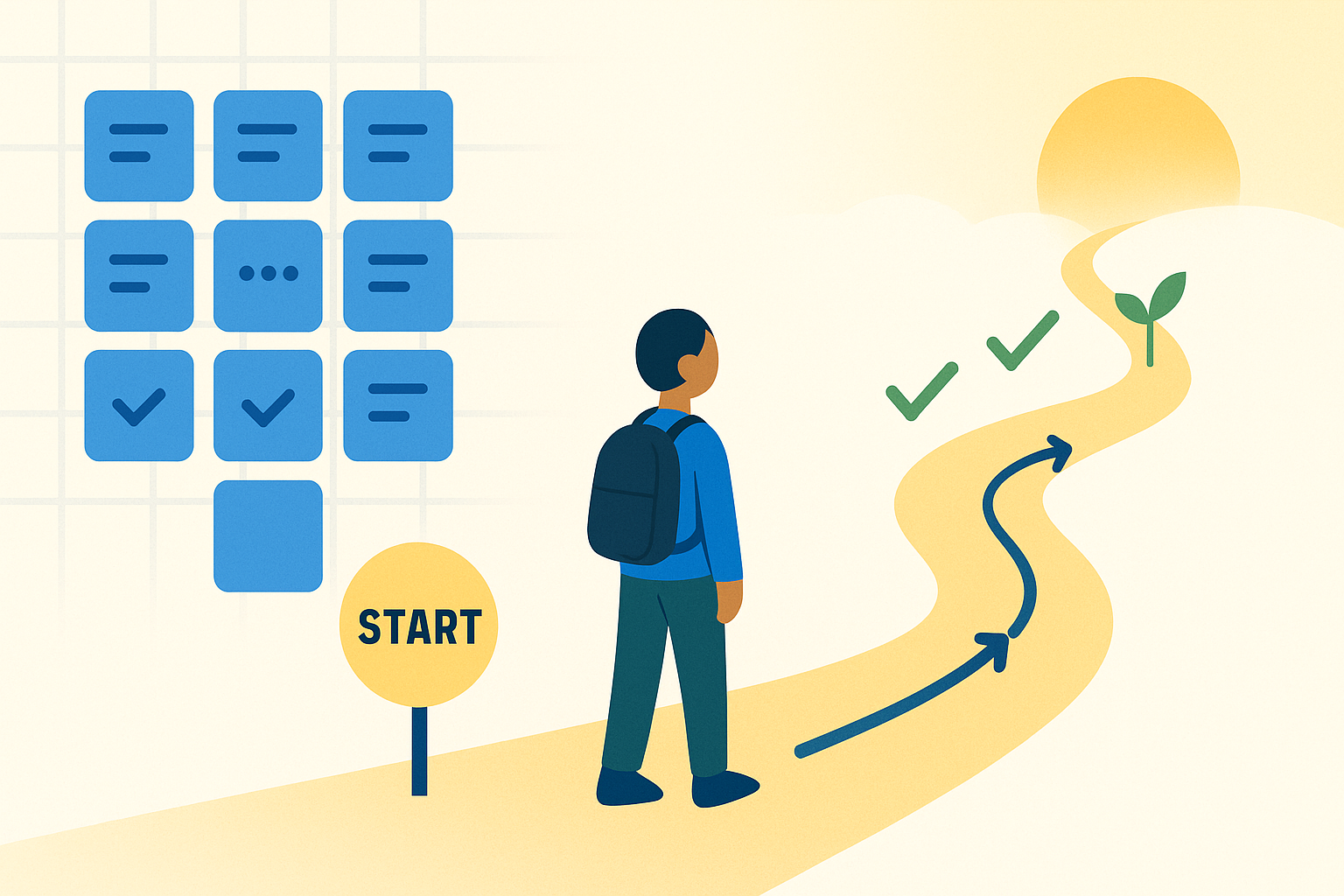
Alternative grading evaluates whether students have actually learned specific skills and concepts, not how well they performed on a single high-stakes moment. Instead of averaging points across quizzes, tests, and homework, you track evidence of learning against clear, observable objectives. Students see exactly what each task is meant to measure and they get multiple chances to demonstrate understanding. The emphasis shifts from collecting grades to building proficiency.
Why educators are shifting to proficiency
Clarity. Objectives make expectations explicit. Students know what “good” looks like and why each activity matters.
Growth. Reassessment lets students act on feedback and try again, which strengthens learning and confidence.
Equity. Progress is judged on what students can do, not how quickly they got there. Different starting points still lead to success.
Persistence. When the path to improvement is visible, students engage earlier and keep going.
Traditional grading often turns class into a points economy. Proficiency reframes school as a learning system with transparent goals and room to improve.
Address common concerns
“Do I have to lower my standards?”
No. Standards usually rise because students must meet defined criteria for each objective. Partial credit that masks gaps is replaced by clear evidence.
“Is this equitable?”
Yes. Proficiency centers outcomes that matter for learning. Timing penalties and one-and-done tests stop defining worth. Students see a fair path to success.
“Will this take more time?”
There is a short setup phase while you define objectives and choose proficiency levels. After that, feedback becomes more focused and grading becomes more consistent because you respond to specific objectives rather than entire assignments.
“What about accountability?”
Accountability is built in. Students are responsible for demonstrating proficiency on every objective. The difference is that the system supports them with feedback and targeted reassessment.
Key takeaways before you begin
- Objectives are everything. They are your rubric rows and your syllabus backbone. If it is important enough to grade, write it as an objective.
- Choose a proficiency scale and keep it simple. Many courses work well with a four-level scheme such as Exemplary, Satisfactory, Not Yet, Unassessable plus a two-level scheme like Complete, Incomplete for effortful engagement.
- Design assessments that show the objective. Ask students to produce evidence tied to verbs from your objectives (analyze, design, justify).
- Close the loop with feedback. Give concise, actionable comments that point to the exact objective and invite a targeted resubmission.
- Plan the grade conversation. Convert proficiency to final grades with a transparent “portfolio thresholds” table so students see how evidence maps to grade distinctions.
Your first small win with TeachFront
- Create one course and add 8–15 clear objectives grouped into 2–3 categories (for example: Course Topics, Quality, Effortful Engagement).
- Attach a proficiency scale to those objectives.
- Refit one existing assignment by selecting a small subset of objectives it should measure. Add brief descriptors for what Exemplary and Satisfactory look like for each.
- Invite reassessment on one objective only for that assignment. Ask students to submit a short note describing what they changed and why.
What success looks like
- Students begin asking “Which objective am I missing?” rather than “How many points is this worth?”
- Feedback is used, not just viewed. Resubmissions focus on a single objective and show visible improvement.
- Your grading time shifts from blanket re-reads to quick checks against the objective students targeted.
Where TeachFront helps
TeachFront gives you a clean way to:
- Publish objectives and proficiency scales your students can understand.
- Rate work at the objective level and deliver focused feedback.
- Support targeted reassessment without regrading entire artifacts.
- Translate portfolios to final grades using transparent thresholds.
Bottom line: Proficiency grading is a mindset shift from scoring attempts to documenting growth. Start small with one assignment and a handful of objectives, then expand as the benefits compound. When students see a clear path from feedback to better work, learning becomes the goal and grades become the record of that journey.